

Part I. Resonance
1. Fiery Action: Toward an Aesthetics of New Heroism
2. A Culture of Resonance: Hypnotism, Wireless Cinema, and the Invention of Intermedial Spectatorship
Part II. Transparency
3. Dances of Fire: Mediating Affective Immediacy
4. Transparent Shanghai: Cinema, Architecture, and a Left-Wing Culture of Glass
Part III. Agitation
5. “A Vibrating Art in the Air”: The Infinite Cinema and the Media Ensemble of Propaganda
6. Baptism by Fire: Atmospheric War, Agitation, and a Tale of Three Cities
Acknowledgments
Notes
Filmography
Index
· · · · · · (收起)
具体描述
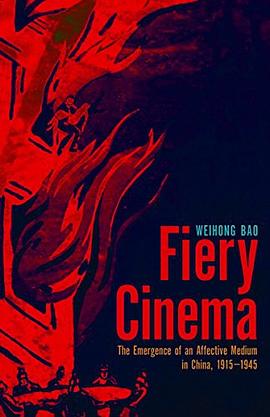
What was cinema in modern China? It was, this book tells us, a dynamic entity, not strictly tied to one media technology, one mode of operation, or one system of aesthetic code. It was, in Weihong Bao’s term, an affective medium, a distinct notion of the medium as mediating environment with the power to stir passions, frame perception, and mold experience. In Fiery Cinema, Bao traces the permutations of this affective medium from the early through the mid-twentieth century, exploring its role in aesthetics, politics, and social institutions.
Mapping the changing identity of cinema in China in relation to Republican-era print media, theatrical performance, radio broadcasting, television, and architecture, Bao has created an archaeology of Chinese media culture. Within this context, she grounds the question of spectatorial affect and media technology in China’s experience of mechanized warfare, colonial modernity, and the shaping of the public into consumers, national citizens, and a revolutionary collective subject. Carrying on a close conversation with transnational media theory and history, she teases out the tension and affinity between vernacular, political modernist, and propagandistic articulations of mass culture in China’s varied participation in modernity.
Fiery Cinema advances a radical rethinking of affect and medium as a key insight into the relationship of cinema to the public sphere and the making of the masses. By centering media politics in her inquiry of the forgotten future of cinema, Bao makes a major intervention into the theory and history of media.
用户评价
##又渡了一劫……
评分##膜拜????
评分##陪伴我开始电影史研究的案头书,写不同章节不断地读,终于有机会一次读完。本书关注电影与其他媒介互动的跨媒介视角,以及突破白话现代主义概念忽略政治维度,提出政治现代主义——左翼的透明美学与抗战时期重庆的宣传理论的尝试,确为电影史研究打开了广阔的视角。但是affective medium关联自然、物质、社会、感官多个层面,这样的理论架构会不会太过开阔,乃至于在丰富诠释之外缺乏内在的连贯性?
评分##slightly overrated? 除了glass architecture眼前一亮以外,其他都像是把media theory的framework套在电影上
评分##重写中国电影史和媒介史。低调,扎实,漂亮。
评分##Mark一下生日当天终于看完。既扎实又有理论雄心。真的佩服整个narrative的框架。除了其他短评提到的对affect概念的重构,打破以上海为中心的电影史叙事之外,特别印象深刻的是对media network/intermediality的探讨,以及propoganda和商业电影如何在affective medium上的交汇。用Fire的意象串联起整个历史书写和理论框架,感觉还挺有说服力的。
评分##slightly overrated? 除了glass architecture眼前一亮以外,其他都像是把media theory的framework套在电影上
评分##Mark一下生日当天终于看完。既扎实又有理论雄心。真的佩服整个narrative的框架。除了其他短评提到的对affect概念的重构,打破以上海为中心的电影史叙事之外,特别印象深刻的是对media network/intermediality的探讨,以及propoganda和商业电影如何在affective medium上的交汇。用Fire的意象串联起整个历史书写和理论框架,感觉还挺有说服力的。
评分##英文水平不足以让我看懂他的深邃思想。
相关图书






本站所有内容均为互联网搜索引擎提供的公开搜索信息,本站不存储任何数据与内容,任何内容与数据均与本站无关,如有需要请联系相关搜索引擎包括但不限于百度,google,bing,sogou 等
© 2026 book.teaonline.club All Rights Reserved. 图书大百科 版权所有