

Part I. Resonance
1. Fiery Action: Toward an Aesthetics of New Heroism
2. A Culture of Resonance: Hypnotism, Wireless Cinema, and the Invention of Intermedial Spectatorship
Part II. Transparency
3. Dances of Fire: Mediating Affective Immediacy
4. Transparent Shanghai: Cinema, Architecture, and a Left-Wing Culture of Glass
Part III. Agitation
5. “A Vibrating Art in the Air”: The Infinite Cinema and the Media Ensemble of Propaganda
6. Baptism by Fire: Atmospheric War, Agitation, and a Tale of Three Cities
Acknowledgments
Notes
Filmography
Index
· · · · · · (收起)
具體描述
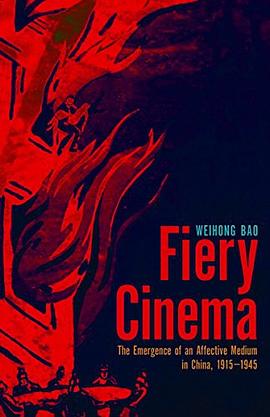
What was cinema in modern China? It was, this book tells us, a dynamic entity, not strictly tied to one media technology, one mode of operation, or one system of aesthetic code. It was, in Weihong Bao’s term, an affective medium, a distinct notion of the medium as mediating environment with the power to stir passions, frame perception, and mold experience. In Fiery Cinema, Bao traces the permutations of this affective medium from the early through the mid-twentieth century, exploring its role in aesthetics, politics, and social institutions.
Mapping the changing identity of cinema in China in relation to Republican-era print media, theatrical performance, radio broadcasting, television, and architecture, Bao has created an archaeology of Chinese media culture. Within this context, she grounds the question of spectatorial affect and media technology in China’s experience of mechanized warfare, colonial modernity, and the shaping of the public into consumers, national citizens, and a revolutionary collective subject. Carrying on a close conversation with transnational media theory and history, she teases out the tension and affinity between vernacular, political modernist, and propagandistic articulations of mass culture in China’s varied participation in modernity.
Fiery Cinema advances a radical rethinking of affect and medium as a key insight into the relationship of cinema to the public sphere and the making of the masses. By centering media politics in her inquiry of the forgotten future of cinema, Bao makes a major intervention into the theory and history of media.
用戶評價
##of all the possibilities to historicize and contextualize media products, Bao has chosen the hardest one.
評分##"Left-wing culture of glass"
評分##英文水平不足以讓我看懂他的深邃思想。
評分##首先必須承認Affective Medium是個超級有意思的framework,基於Henri Bergson,將電影放置在觀眾(Subject)和錶徵(Object)中間。它不隻是一個機械化的觀看機製,讓創作者主動得把故事和信息喂給被動的觀眾。當然可能好萊塢大部分老白中産階級是這樣,但我想,他們看瞭一部爛片也會憤憤不平吧。所以在不同的社會語境下,必定有一個東西把觀眾和錶徵串在一起。在包衛紅的眼裏,它就是情動。當然在現代性中,要談語境,確實跨媒介的角度是很閤適的。自己要寫點農村放映的東西,包的研究可能第一個關注民國時期的農村放映,之前的研究都過度關注上海等大城市瞭,第五章還是很有幫助的。我不太喜歡第二章,雖然說電視詞源上可能是韆裏眼,但是電視媒介的引入真的與老百姓集體對於通靈的興趣有關?
評分##不是那種一眼看上去就讓人喜歡的書。槽點很多,比如語言晦澀造成的閱讀障礙、腦洞過大的理論解讀,每個章節內部的結構也有些鬆散。但相比於其他中國早期電影研究(比如張真那本),包衛紅確實抓住瞭一個更有概括力和延展性的視角。把電影看作affect medium,由此勾連瞭左翼電影和商業電影(甚至政治宣傳片),突齣瞭電影媒介和其他媒介的互動(戲劇、建築、報紙、大眾科學等等),對於重新思考20世紀中國文藝史整體都有幫助。
評分##寫得影史三城記,藉得烈火一縷魂。
評分##膜拜????
評分##陪伴我開始電影史研究的案頭書,寫不同章節不斷地讀,終於有機會一次讀完。本書關注電影與其他媒介互動的跨媒介視角,以及突破白話現代主義概念忽略政治維度,提齣政治現代主義——左翼的透明美學與抗戰時期重慶的宣傳理論的嘗試,確為電影史研究打開瞭廣闊的視角。但是affective medium關聯自然、物質、社會、感官多個層麵,這樣的理論架構會不會太過開闊,乃至於在豐富詮釋之外缺乏內在的連貫性?
評分##寫得影史三城記,藉得烈火一縷魂。
相關圖書





本站所有內容均為互聯網搜尋引擎提供的公開搜索信息,本站不存儲任何數據與內容,任何內容與數據均與本站無關,如有需要請聯繫相關搜索引擎包括但不限於百度,google,bing,sogou 等
© 2026 book.teaonline.club All Rights Reserved. 圖書大百科 版權所有