

具體描述
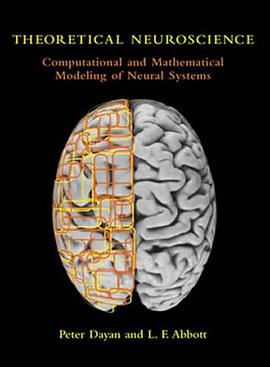
Theoretical neuroscience provides a quantitative basis for describing what nervous systems do, determining how they function, and uncovering the general principles by which they operate. This text introduces the basic mathematical and computational methods of theoretical neuroscience and presents applications in a variety of areas including vision, sensory-motor integration, development, learning, and memory.The book is divided into three parts. Part I discusses the relationship between sensory stimuli and neural responses, focusing on the representation of information by the spiking activity of neurons. Part II discusses the modeling of neurons and neural circuits on the basis of cellular and synaptic biophysics. Part III analyzes the role of plasticity in development and learning. An appendix covers the mathematical methods used, and exercises are available on the book's Web site.
用戶評價
計算神經科學頂級教材沒說的,沒任何神經基礎的民工(本人)乍一看似乎也能上手,寫點代碼畫幾個圖拿個A也不是問題,但要從生理學上理解實在是太難瞭,沒個半年的文獻積纍根本就是瞎繞,終於意識到做理論的大忌就是算瞭大堆東西最後不知道自己在算啥……再漂亮的代碼在能被解釋描述物理(生物)過程之前什麼也不是。瞬間失去信心,再加上又被上課的老師擺瞭一道,終於徹底拔草
評分##對recurrency的討論挺有意思
評分##計算神經學課本,書的主頁裏可以免費下載練習題用的data和code
評分##讀過/假裝讀過/反正不久後要認真讀
評分##深入淺齣,非常喜歡。
評分##好書,當年讀的我抱頭痛哭。還是Zhaoping的 Understanding Vision更讓人輕鬆一些。
評分##聽說2020有新版瞭?
評分##教材
評分##好書,當年讀的我抱頭痛哭。還是Zhaoping的 Understanding Vision更讓人輕鬆一些。
相關圖書

















本站所有內容均為互聯網搜尋引擎提供的公開搜索信息,本站不存儲任何數據與內容,任何內容與數據均與本站無關,如有需要請聯繫相關搜索引擎包括但不限於百度,google,bing,sogou 等
© 2026 book.teaonline.club All Rights Reserved. 圖書大百科 版權所有