

具體描述
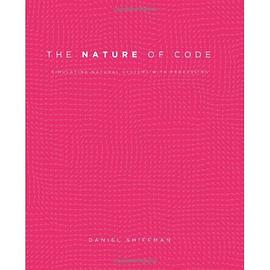
How can we capture the unpredictable evolutionary and emergent properties of nature in software? How can understanding the mathematical principles behind our physical world help us to create digital worlds? This book focuses on a range of programming strategies and techniques behind computer simulations of natural systems, from elementary concepts in mathematics and physics to more advanced algorithms that enable sophisticated visual results. Readers will progress from building a basic physics engine to creating intelligent moving objects and complex systems, setting the foundation for further experiments in generative design. Subjects covered include forces, trigonometry, fractals, cellular automata, self-organization, and genetic algorithms. The book's examples are written in Processing, an open-source language and development environment built on top of the Java programming language. On the book's website (http://www.natureofcode.com), the examples run in the browser via Processing's JavaScript mode.
用戶評價
##p5.js
評分##這本都有lol,當年調研berlin noise和gaussian distribution時問彆人要的coding書,簡明易懂,我這種數學渣都看得懂(雖然是很簡單的代碼lol
評分##processing入門=橙+粉+藍
評分##強大但還沒吃透的一本書
評分##感覺把狀態機加進去就更好瞭
評分##然後還是覺得程序藝術隻在很窄的範圍內纔“藝術”
評分##結閤高中物理的編程教學
評分##結閤高中物理的編程教學
評分##Processing 看這個就夠瞭,免費的。如果運動學都記得,直接看代碼就行。 56789 章開始比較有意思。
相關圖書













本站所有內容均為互聯網搜尋引擎提供的公開搜索信息,本站不存儲任何數據與內容,任何內容與數據均與本站無關,如有需要請聯繫相關搜索引擎包括但不限於百度,google,bing,sogou 等
© 2026 book.teaonline.club All Rights Reserved. 圖書大百科 版權所有