

具体描述
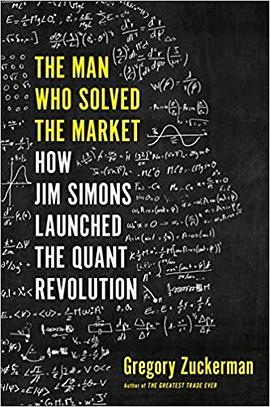
Bestselling author and veteran Wall Street Journal reporter Gregory Zuckerman answers the question investors have been asking for decades: How did Jim Simons do it?
Jim Simons is the greatest money maker in modern financial history. His track record bests those of legendary investors including Warren Buffett, Peter Lynch, Ray Dalio, and George Soros. Yet Simons and his strategies are shrouded in mystery. Wall Street insiders have long craved a view into Simons's singular mind, as well as the definitive account of how his secretive hedge fund, Renaissance Technologies, came to dominate financial markets. Bestselling author and Wall Street Journal reporter Gregory Zuckerman delivers the goods.
After a legendary career as a mathematician at MIT and Harvard, and a stint breaking Soviet code for the U.S. government, Simons set out to conquer financial markets with a radical approach. He hired mathematicians, physicists, and computer scientists, most of whom knew little about finance. Experts scoffed as Simons built Renaissance Technologies from a dreary Long Island strip mall. He amassed piles of data and developed algorithms to hunt for deeply hidden patterns in the numbers--patterns that reveal rules governing all markets.
Simons and his colleagues became some of the richest individuals in the world and their data-driven approach launched a quantitative revolution on Wall Street. They also anticipated dramatic shifts in society. Eventually, governments, sports teams, hospitals, and businesses in almost every industry embraced Simons's methods.
Simons and his team used their newfound wealth to upend society. Simons has become a major influence in scientific research, education, and politics, while senior executive Robert Mercer is more responsible than anyone else for Donald Trump's victorious presidential campaign. The Renaissance team's models didn't prepare executives for the ensuing backlash.
The Man Who Solved the Market is the dramatic story of how Jim Simons and a group of unlikely mathematicians remade Wall Street and transformed the world.
用户评价
##19#15 (又一本)曾经求翻而未得的书。略有失望,但仍然有趣,结尾稍弱,整体只能算是中规中矩。Simmons虽然招募了一支才华横溢的科学家团队,“launch”了量化革命,但严格地“the man who solved the market”的标题有标题党之嫌。与LTCM之间的对比很有趣。但大奖章仍然是那个神秘的大奖章,中间几个章节充斥着“进一步改进了算法”、“效果拔群”之类的描述,但干货太少。作为2019年最后一本书(highly likely),希望自己明年也能solve一些东西吧。
评分##刚出版的新书《解决市场的人:西蒙斯如何开创了量化革命》,不管是做基本面还是做量化投资的金融市场专业人员都可以看看。文艺复兴公司的大奖章基金长期年化收益率66%真是神奇的事。里面描绘他早期做的很多期货投机,后来的量化,多次巨额亏损接近清盘,合伙人分道扬镳等等。可惜书里没有说到文艺复兴的老板捐款上亿美元给川普竞选总统成功的事。
评分[PL]最近两个月很有意思,几个投资者先后著书立传,包括黑石Schwartzman的What it takes,凯雷Rubenstein的the American story(历史),和活久见的Simons这本传记。40岁开始创立公司的Simons,性格据说挺像Mask,比其他大神多了些专注和坚持,在我们眼里是无法逾越的高山,而文艺复兴的表现一直让其他对冲基金公司,哪怕是顶尖的那几家也难以望其项背。其一向低调神秘的作风让同行们百思不得其解。因此这本书的出版,即使和交易秘密不相关,也是完全出乎意料之外的惊喜。Simons和麾下数学家们在解码市场规律其中也有不少经历教训,比如找出模型代码错误,内斗下能保住最大的alpha-人才。天才之处无法模仿,能更精进一寸便是所得。
评分##“Simons could be remembered for what he did with his fortune, as well as how he made it.”
评分##痛读两天搞定。虽然只是传记,但还是了解到很多的,周末有空时写心得。
评分##没啥大意思
评分##终于读完了这本关于最牛逼(之一)也最神秘的对冲基金文艺复兴,和其创始人Jim Simons的流水账……Good life story,最后谈到2018年12月美股crash的时候,即使是Simons也打电话给自己的Family Office 负责人,问”我们要不要做空市场来对冲风险“?所以理性决策是多么多么难……
评分##“Simons could be remembered for what he did with his fortune, as well as how he made it.”
评分##【第三十三本】要读一本英文原著真是费时间啊,前前后后读了三周时间。像文艺复兴基金,西蒙斯这样的高频量化基金的故事总是充满了神秘和向往,打败市场对传奇和量化高频交易的鼻祖,让很多人神往。但是真的读了这本书后才发现,整个公司的创始和发展历程充满了波折和变化,即使是西蒙斯这样的学术大拿也不是说轻松搞定市场的,何况最大的调整不仅仅是模型,而是如何管理手下这么多天才和科学家,让大家能在同一个平台为同一个目标一起努力,这远比西蒙斯研究数学问题要来的复杂的多。从Baum到Ax到Berlecamp到Mercier和Brown,从最初的趋势交易到指标交易,慢慢过渡到后来完全机器自动交易,即使取得巨大的成功,但是碰到了2008年金融危机时西蒙斯还是不能完全信任程序判断,要人为干预仓位,所以投资真是一项反人性的事
相关图书









本站所有内容均为互联网搜索引擎提供的公开搜索信息,本站不存储任何数据与内容,任何内容与数据均与本站无关,如有需要请联系相关搜索引擎包括但不限于百度,google,bing,sogou 等
© 2026 book.teaonline.club All Rights Reserved. 图书大百科 版权所有