
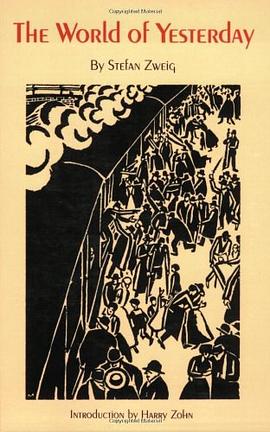

具体描述
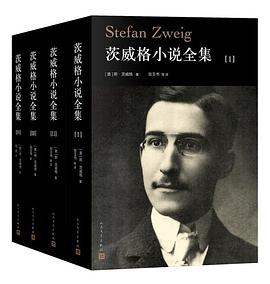
Stefan Zweig (1881-1942) was a poet, novelist, and dramatist, but it was his biographies that expressed his full genius, recreating for his international audience the Elizabethan age, the French Revolution, the great days of voyages and discoveries. In this autobiography he holds the mirror up to his own age, telling the story of a generation that 'was loaded down with a burden of fate as was hardly any other in the course of history'. Zweig attracted to himself the best minds and loftiest souls of his era: Freud, Yeats, Borgese, Pirandello, Gorky, Ravel, Joyce, Toscanini, Jane Addams, Anatole France, and Romain Rolland are but a few of the friends he writes about. Stefan Zweig was an Austrian writer whose life connected with James Joyce, Richard Strauss, Sigmund Freud and Adolf Hitler - among many others. He was, essentially, a European of the old school, and his last book, "The World of Yesterday", testifies to this. Zweig was born in 1881; he lived to see the continent torn apart by two world wars and committed suicide in Brazil in 1942 when, after the fall of Singapore to the Japanese, he came to believe that a Nazi world was inevitable. "The World of Yesterday" was written shortly before his suicide and was intended as a literary capsule to remind future generations of the world that they had lost, and how that loss had come about. The main trajectory of the book is from an old world of seeming 'security' in which notions of peace, dignity and learning reigned, to the new world of war in which Hitler had destroyed all of these things. Zweig provides a vivid portrait of how war and terror can sweep over a people who are seemingly oblivious to what is happening to them. The process, in Zweig's view, vindicates the apparent pessimism of his friend Sigmund Freud - who believes that culture could never overcome the subconscious and malevolent desires of a people. Zweig lost almost everything he had to the Nazis. He was an Austrian jew who fled because he knew what was coming. The book is written entirely from memory. Its language consequently tends to lurch from the high flown and sentimental, to chillingly accurate vignettes of how a people can delude themselves about a catastrophe in their midst. He manages to convey his horror when, on his final visit to Austria, he realised that none of his friends and family could imagine the worst that could happen - and hence did not believe his exhortations to leave while they could: 'They invited each other to full-dress parties (little thinking that they would soon be wearing prisoner's clothes in a concentration camp)'.
用户评价
##茨威格的书真的是很容易读进去的那种…
评分##@2016-10-18 00:46:47
评分##我要写一本书的话,标题就叫“fire and impatience”,P229
评分##Meet the time as it meets us.
评分##Meet the time as it meets us.
评分##第二次读完,和两年前相比时的心情比更难受,对于一个在欧洲生活12年半的人来说,可能是这两年欧洲发生的事情更能让我relate这部作品,我们的文明和自由存在的时候是那么美好,但是何其脆弱?字里行间也许能透露出茨威格本人的一点中二,但是没人能否定这个作者热爱文明热爱和平的noble heart。他那种眼睁睁的看着属于自己的,属于昨日的美好世界让两次senseless的战争毁掉的痛苦,我们恐怕时体会不到的。在1942年在异国他乡结束自己的生命也许是最好的选择。这是一个文学大家的傲骨,让我肃然起敬。PS:感谢Wes Anderson完美的把握了这部作品的灵魂。茨威格在世的时候没想到自己会如此成功,而布达佩斯大饭店则是真正意义上告慰了他的在天之灵
评分##but, after all, shadows themselves are born of light. and only he who has experienced dawn and dusk, war and peace, ascent and decline, only he has truly lived. 五星推荐所有朋友读
评分##花了一个半月读完。goodbye,yesterday.
评分##茨威格的书真的是很容易读进去的那种…
相关图书










本站所有内容均为互联网搜索引擎提供的公开搜索信息,本站不存储任何数据与内容,任何内容与数据均与本站无关,如有需要请联系相关搜索引擎包括但不限于百度,google,bing,sogou 等
© 2026 book.teaonline.club All Rights Reserved. 图书大百科 版权所有