

具体描述
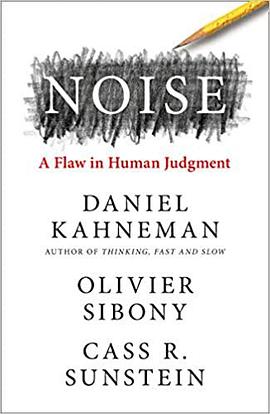
From the best-selling author of Thinking, Fast and Slow, the co-author of Nudge, and the author of You Are About to Make a Terrible Mistake! comes Noise, a revolutionary exploration of why people make bad judgments, and how to control both noise and cognitive bias.
Imagine that two doctors in the same city give different diagnoses to identical patients - or that two judges in the same courthouse give markedly different sentences to people who have committed the same crime. Suppose that different interviewers at the same firm make different decisions about indistinguishable job applicants - or that when a company is handling customer complaints, the resolution depends on who happens to answer the phone. Now imagine that the same doctor, the same judge, the same interviewer, or the same customer service agent makes different decisions depending on whether it is morning or afternoon, or Monday rather than Wednesday. These are examples of noise: variability in judgments that should be identical.
In Noise, Daniel Kahneman, Olivier Sibony, and Cass R. Sunstein show the detrimental effects of noise in many fields, including medicine, law, economic forecasting, forensic science, bail, child protection, strategy, performance reviews, and personnel selection. Wherever there is judgment, there is noise. Yet, most of the time, individuals and organizations alike are unaware of it. They neglect noise. With a few simple remedies, people can reduce both noise and bias, and so make far better decisions.
Packed with original ideas, and offering the same kinds of research-based insights that made Thinking, Fast and Slow and Nudge groundbreaking New York Times best sellers, Noise explains how and why humans are so susceptible to noise in judgment - and what we can do about it.
用户评价
##基本上是Gladwell和Levitt的混合型产物。Gladwell是纯业余选手的口若悬河,《噪声》则是用初级读者可以接受的写作模式写一些简单的学术概念;Levitt用很难得的数据来做出意想不到的结果,而且思路宽阔,显然是比那些论文综述专业户高不少,《噪音》没这个高度,也不新颖,反而是把普通的概念翻来覆去地讲,那些计量经济学里的概念新瓶装旧酒,想拔高一下思想,还没拔起来。 写作语言平淡,偏畅销书风格。 不知道看出那么多门道的评论者是怎么悟出来的。
评分##统计学原理很好懂,如何把这个东西讲的大家都懂比较难。如果不是对脑科学、心理学有研究,那么略读掌握概念就好了。
评分##Truth nothing but the harsh truth. Not much absorption and takeaway from it. Exemplified with several industries , ranging from law systems,hospital , criminal cases etc. theoretically applicable than practice
评分##主要讲的是system noise以及怎么从一个大的机构/企业的角度来减少noise,观点不算新,但很系统地把这个概念讲得透、讲得通俗,而且把重要性讲明白了
评分##很简单的理论水了一本书,信息密度很低,我怀疑多少捧吹的人真正读完了全书……唯一欣慰的可能是高度肯定了智商对于判断力和能力的作用 - 勤劳和汗水固然让人不至于完全失去希望,但真正的高难度复杂学科需要的就是99%智商和1%智商带来的灵感呀……????????♀️
评分##book about better evaluating error, and better making decisions. we should acknowledge that algorithms are better than human in reducing noise, while not worse than human in creating bias.
评分##A few interesting concepts clarified: noise vs bias, pattern noise vs occasion noise, rules vs standard.
评分##统计学原理很好懂,如何把这个东西讲的大家都懂比较难。如果不是对脑科学、心理学有研究,那么略读掌握概念就好了。
评分##book about better evaluating error, and better making decisions. we should acknowledge that algorithms are better than human in reducing noise, while not worse than human in creating bias.
相关图书




本站所有内容均为互联网搜索引擎提供的公开搜索信息,本站不存储任何数据与内容,任何内容与数据均与本站无关,如有需要请联系相关搜索引擎包括但不限于百度,google,bing,sogou 等
© 2026 book.teaonline.club All Rights Reserved. 图书大百科 版权所有