
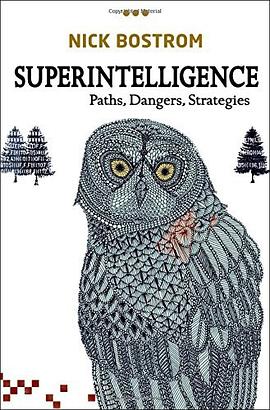

具體描述
The human brain has some capabilities that the brains of other animals lack. It is to these distinctive capabilities that our species owes its dominant position. Other animals have stronger muscles or sharper claws, but we have cleverer brains.If machine brains one day come to surpass human brains in general intelligence, then this new superintelligence could become very powerful. As the fate of the gorillas now depends more on us humans than on the gorillas themselves, so the fate of our species then would come to depend on the actions of the machine superintelligence.But we have one advantage: we get to make the first move. Will it be possible to construct a seed AI or otherwise to engineer initial conditions so as to make an intelligence explosion survivable? How could one achieve a controlled detonation?To get closer to an answer to this question, we must make our way through a fascinating landscape of topics and considerations. Read the book and learn about oracles, genies, singletons; about boxing methods, tripwires, and mind crime; about humanitys cosmic endowment and differential technological development; indirect normativity, instrumental convergence, whole brain emulation and technology couplings; Malthusian economics and dystopian evolution; artificial intelligence, and biologicalcognitive enhancement, and collective intelligence.This profoundly ambitious and original book picks its way carefully through a vast tract of forbiddingly difficult intellectual terrain. Yet the writing is so lucid that it somehow makes it all seem easy. After an utterly engrossing journey that takes us to the frontiers of thinking about the human condition and the future of intelligent life, we find in Nick Bostroms work nothing less than a reconceptualization of the essential task of our time.
用戶評價
##太有勇氣的一本書。有憑一人一書之力打造一個科學體係的架勢,試圖預測,理解和控製一個超越人類認知範圍的物種。燒腦過癮。
評分##太有勇氣的一本書。有憑一人一書之力打造一個科學體係的架勢,試圖預測,理解和控製一個超越人類認知範圍的物種。燒腦過癮。
評分##讀過中文版
評分##3.5
評分雖然閱讀過程痛不欲生,但是本書的內容(人工智能、哲學)是我感興趣的。作者是牛津大學人類未來學院院長,所以算是領域內重量級的書吧。然而,書中看似嚴謹的邏輯在我看來也有漏洞,整體感覺比較扯。
評分##Too boring... Someone can definitely write a book with counter arguments. And AI is just like nuclear technologies: men should be more careful with ourselves, not the technologies.
評分##想到有一個唯一目標是算pi值的超級智能,在人類滅絕一百萬年以後,窮盡瞭地球以緻全部星係資源,還在孜孜不倦地計算pi值,就有點兒好笑呢
評分##Too boring... Someone can definitely write a book with counter arguments. And AI is just like nuclear technologies: men should be more careful with ourselves, not the technologies.
評分##或許會被視作領域的奠基之作,可能在搭框架和 raise awareness 方麵貢獻明顯。但實在太dry,對看過足夠多SIFI、稍有ML背景的讀者來說新鮮有意思的內容也不多。
相關圖書






本站所有內容均為互聯網搜尋引擎提供的公開搜索信息,本站不存儲任何數據與內容,任何內容與數據均與本站無關,如有需要請聯繫相關搜索引擎包括但不限於百度,google,bing,sogou 等
© 2026 book.teaonline.club All Rights Reserved. 圖書大百科 版權所有