
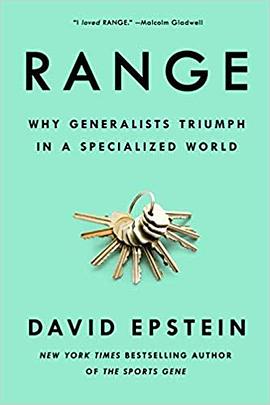

具體描述
“Range is an urgent and important book, an essential read for bosses, parents, coaches, and anyone who cares about improving performance.” —Daniel H. Pink
What's the most effective path to success in any domain? It's not what you think.
Plenty of experts argue that anyone who wants to develop a skill, play an instrument, or lead their field should start early, focus intensely, and rack up as many hours of deliberate practice as possible. If you dabble or delay, you’ll never catch up to the people who got a head start. But a closer look at research on the world’s top performers, from professional athletes to Nobel laureates, shows that early specialization is the exception, not the rule.
David Epstein examined the world’s most successful athletes, artists, musicians, inventors, forecasters and scientists. He discovered that in most fields—especially those that are complex and unpredictable—generalists, not specialists, are primed to excel. Generalists often find their path late, and they juggle many interests rather than focusing on one. They’re also more creative, more agile, and able to make connections their more specialized peers can’t see.
Provocative, rigorous, and engrossing, Range makes a compelling case for actively cultivating inefficiency. Failing a test is the best way to learn. Frequent quitters end up with the most fulfilling careers. The most impactful inventors cross domains rather than deepening their knowledge in a single area. As experts silo themselves further while computers master more of the skills once reserved for highly focused humans, people who think broadly and embrace diverse experiences and perspectives will increasingly thrive.
用戶評價
##這本書從一月讀到四月,一開始覺得很棒,給我瞭新的啓發,range maybe better than hyperspecialization and do not feel lag behind 但是一整本書翻來覆去的將案例就有點說教瞭 but still, it inspired me and mitigated my anxiety.
評分##"Mental meandering and personal experimentation are sources of power, and head starts are overrated"
評分##剖析瞭很多大傢習以為常的理論,提供瞭不同的見解。
評分##Finished 10/12 chapters. A great challenge to 10k hour rule and don't be afraid of falling behind. When match quality isn’t good, quitting is a better way out to seek other options you feel passionate about where grit and perseverance are in the way of ‘quitting’. Van Gogh and self-discovery of rare genetic disease example
評分##David Epstein
評分##講的是通纔和專纔的取捨關係,當前世界的技能格局,以及通纔的技能策略
評分##講的是通纔和專纔的取捨關係,當前世界的技能格局,以及通纔的技能策略
評分##Don't feel behind.
評分##讀完整本書的收獲和讀完書名的收獲差不多。書的內容基本就是用各種角落裏挖齣的符閤自己論點的真實故事,澆上無限的瑣碎細節,生生填滿的。
相關圖書















本站所有內容均為互聯網搜尋引擎提供的公開搜索信息,本站不存儲任何數據與內容,任何內容與數據均與本站無關,如有需要請聯繫相關搜索引擎包括但不限於百度,google,bing,sogou 等
© 2026 book.teaonline.club All Rights Reserved. 圖書大百科 版權所有